> For the complete documentation index, see [llms.txt](https://www.oraclelabs.link/llms.txt). Markdown versions of documentation pages are available by appending `.md` to page URLs; this page is available as [Markdown](https://www.oraclelabs.link/blog/articles/two-factor-authentication-to-the-server-via-ssh.md).
# Two-factor authentication to the server via ssh
In this series of mini articles, we continue to describe how to deploy high-availability and secure Chainlink node. In this article we describe how to enable 2FA on the Guard VM server via ssh.
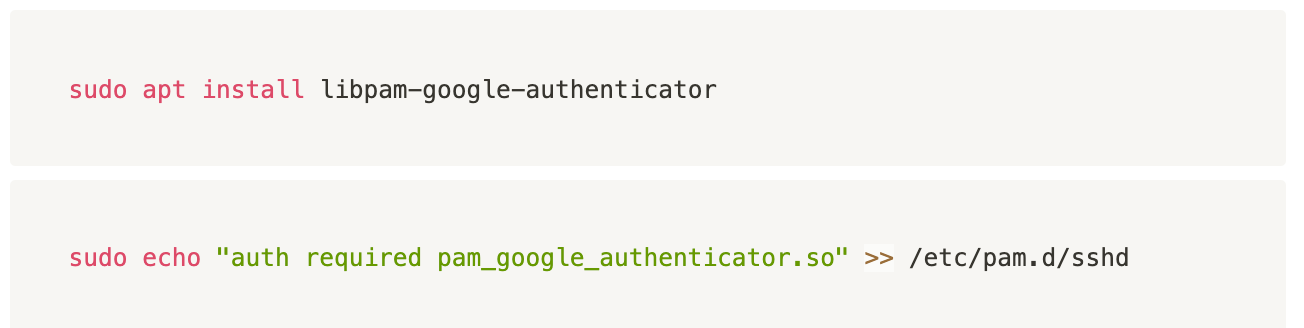
### Initial Setup
Note: If you get “permission denied” when running the command, use vim and add.
### **Setting up Google Authenticator**
And answer according to the pattern:
* Make tokens “time-base”: yes
* Update the .google\_authenticator file: yes
* Disallow multiple uses: yes
* Increase the original generation time limit: no
* Enable rate-limiting: yes
With the received data (scan qr or secret key), create a new Google Authenticator account.
If you add it manually:
* Account: arbitrary name-service ID
* Key: Your new secret key
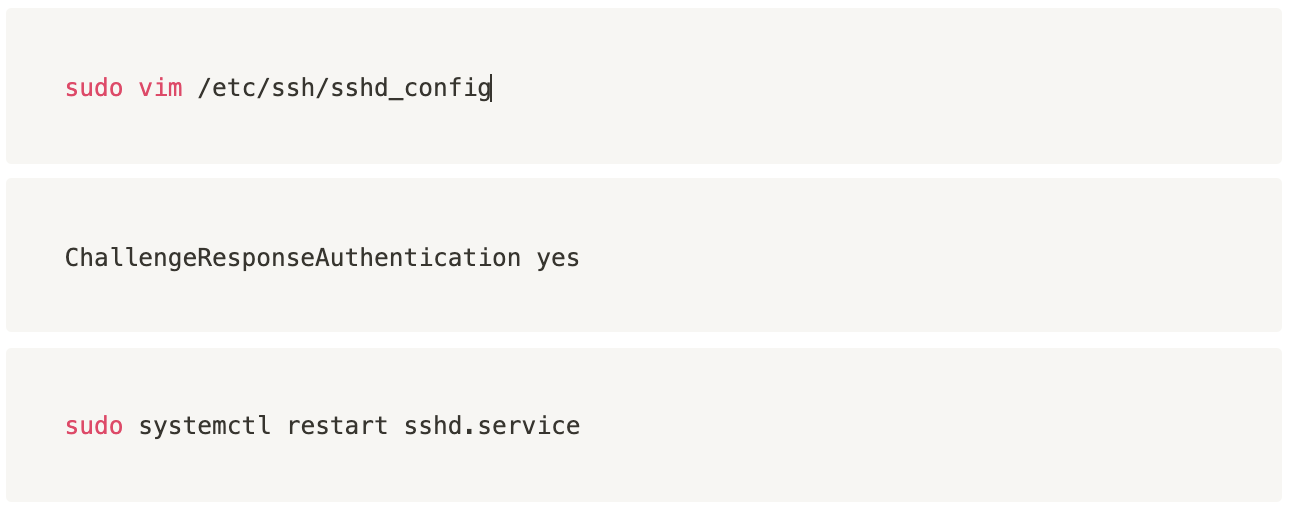
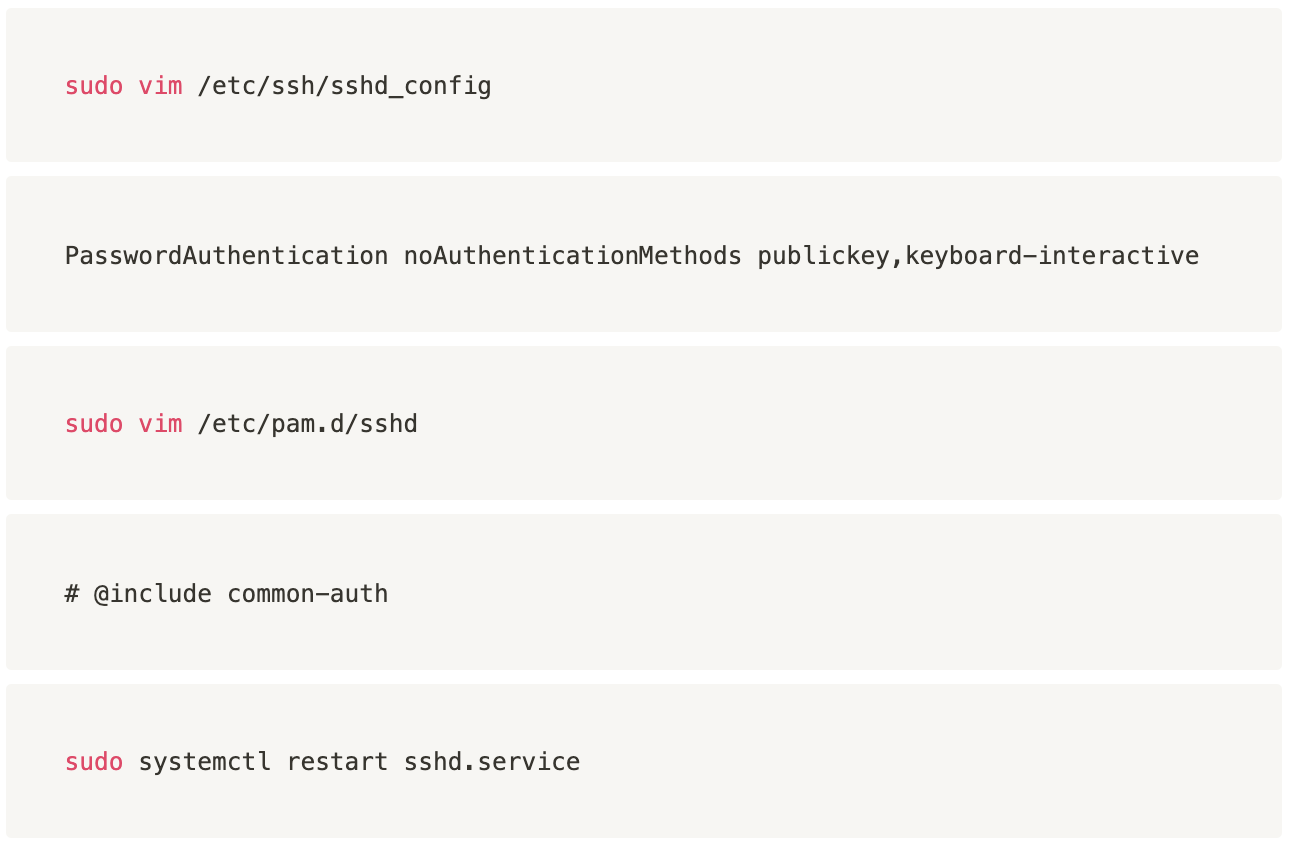
#### **Enable mandatory verification of Google Authenticator on the server**
Now the server can only be accessed via ssh key and google authenticator code.
### **Sources:**
1.
2.